SEELab 3.0
| Links: Buy @ CSpark Research | PyPi
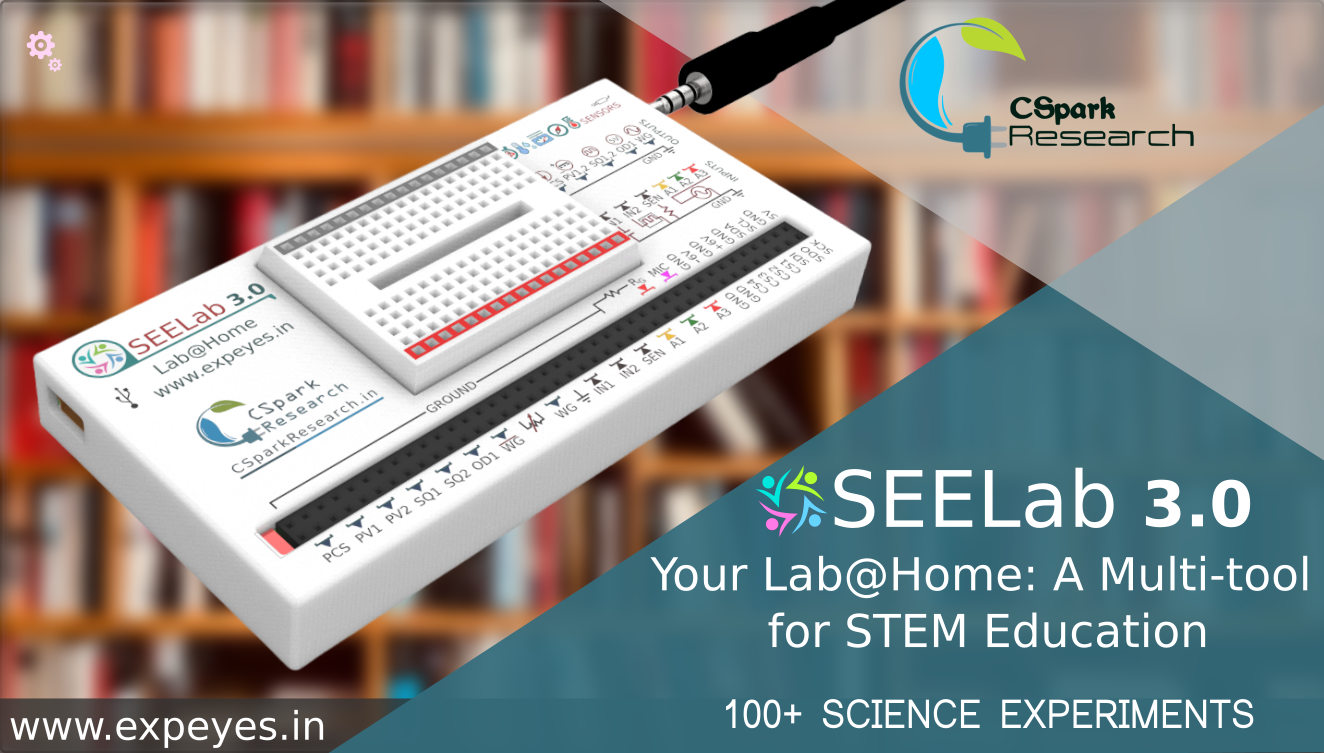
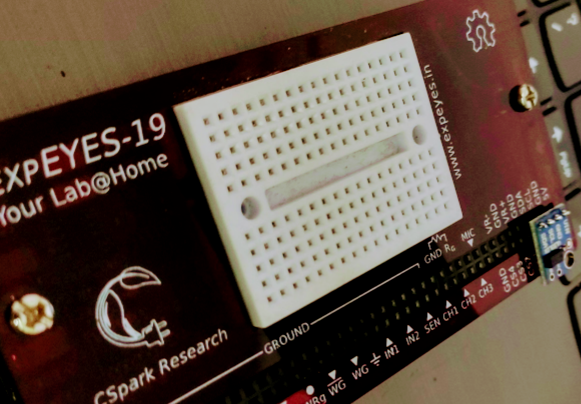
SEELab 3 is a versatile, all-in-one test and measurement tool designed for hands-on learning in science and engineering. It’s an upgrade to its predecessor, ExpEYES17, and is widely used for educational purposes from high school to university level. The device is known for its simplicity, flexibility, and low cost, making it an accessible tool for students and individuals.
- The SEELab 3: A Complete Lab in Your Pocket
- The Software Ecosystem: The Brains Behind the Power
The SEELab 3: A Complete Lab in Your Pocket
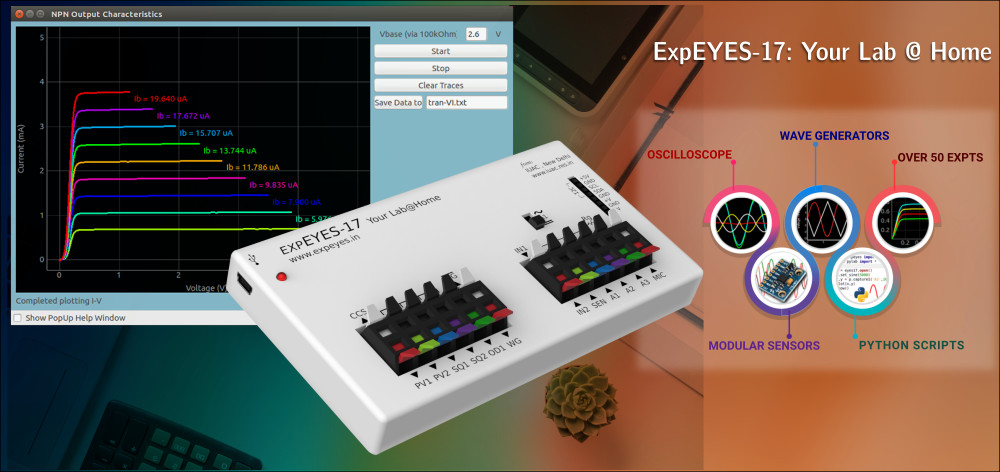
The SEELab 3 is a revolutionary, all-in-one test and measurement tool that is making hands-on science and engineering accessible to everyone. Developed as a successor to the popular ExpEYES17, this versatile device is widely used in educational settings, from high schools to universities, and is also a favorite among hobbyists and electronics enthusiasts.
The device is the latest is a long line of prototypes I built, which are documented here
more than 3000 units in circulation , and 10000+ downloads on the play store.
Traditional Lab Manuals
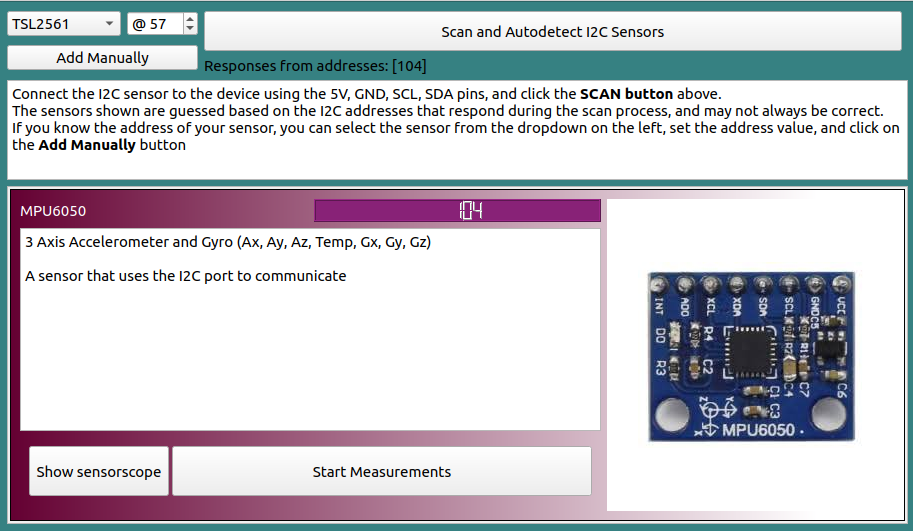
Sensor Oscilloscope for accelerometers and gyroscopes
Measure sensor readings at high speeds with precise timestamps for Fourier analysis Continue reading Sensor Oscilloscope for accelerometers and gyroscopes
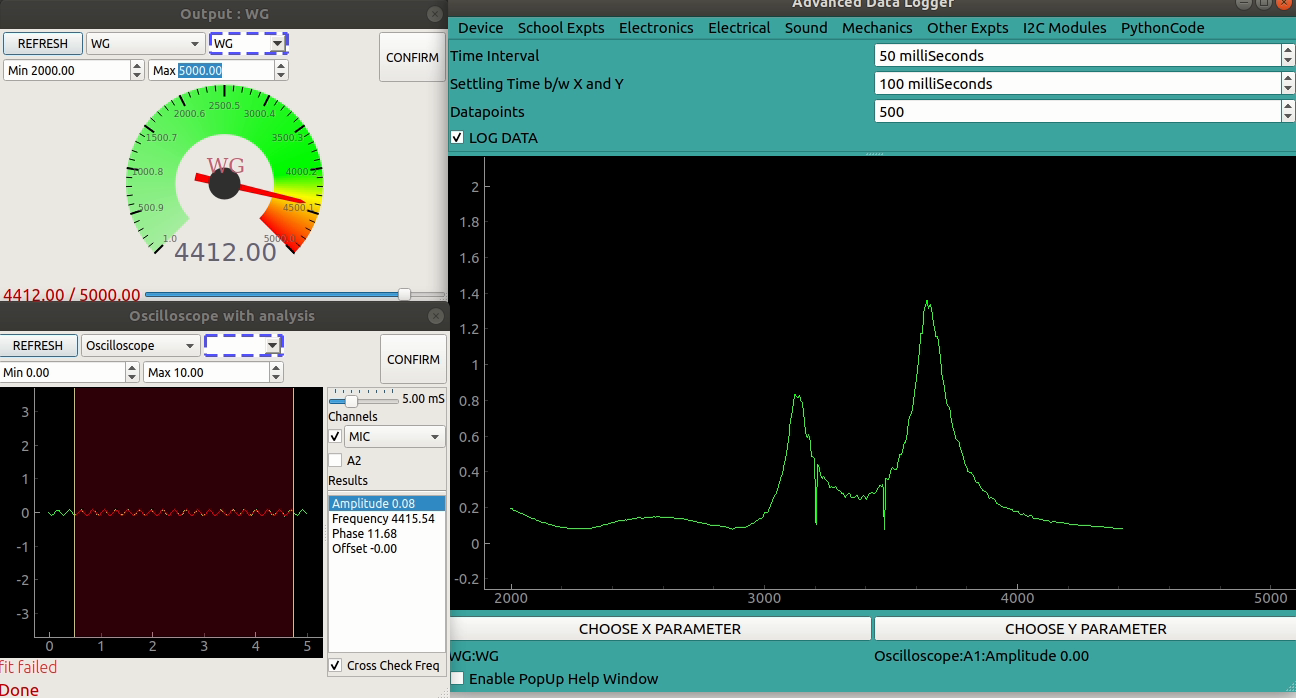
Advanced Data Logger
Plot variation of parameters with respect to another Continue reading Advanced Data Logger
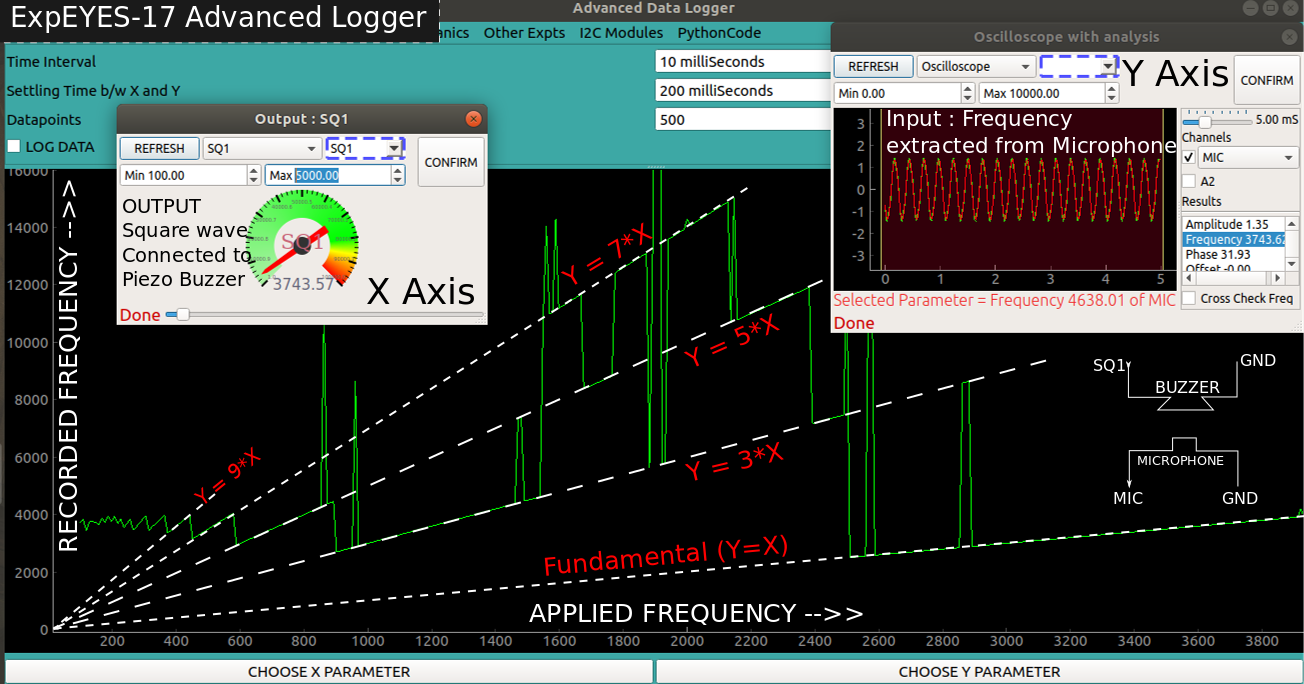
Piezo buzzer resonance with a square wave generator
The advanced data logger is used to study piezo resonance and square wave components Continue reading Piezo buzzer resonance with a square wave generator
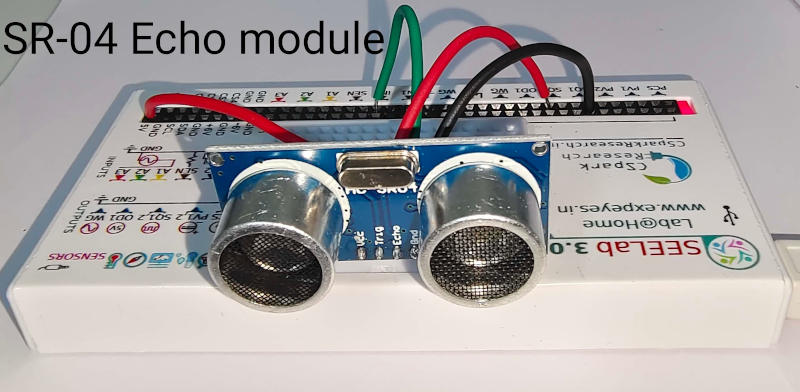
Pulling apart the SR04 Echo based Distance sensor
Study of the SR04 echo module with interactive schematics. Continue reading Pulling apart the SR04 Echo based Distance sensor

Pendulum Timing using Light Interruption
Measuring pendulum period using LED + phototransistor (SEN) Continue reading Pendulum Timing using Light Interruption
Blog Posts
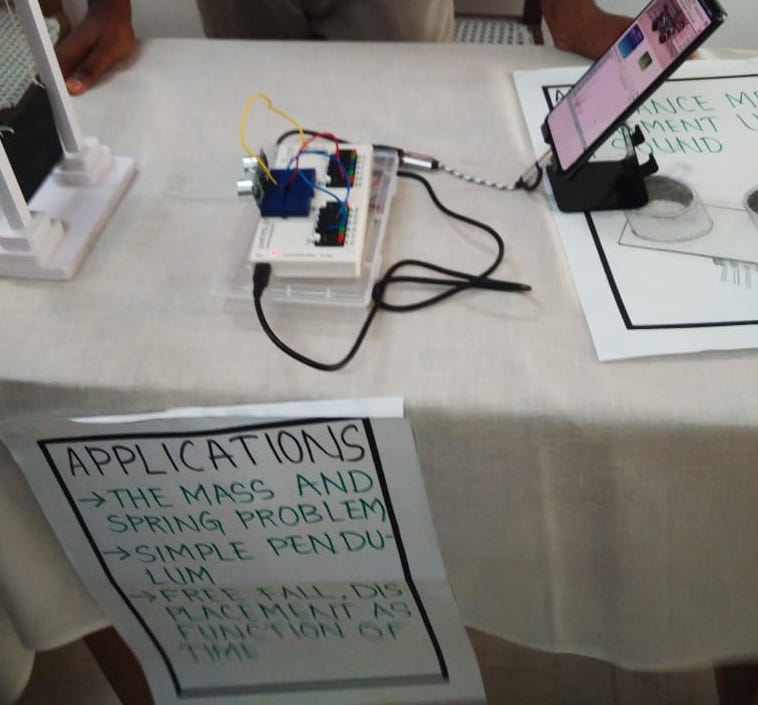
Science Exhibition, University of Calicut
A Showcase of Innovative Science Demonstrations with ExpEYES17 at the University of Calicut Continue reading Science Exhibition, University of Calicut
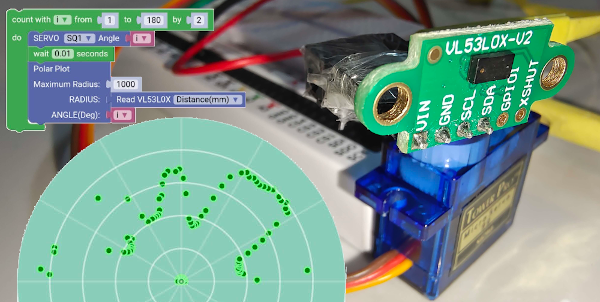
Scanning Radar with a Servo Motor and the VL53L0X
Create a surroundings mapping tool using the VL53L0X distance measurement sensor Continue reading Scanning Radar with a Servo Motor and the VL53L0X
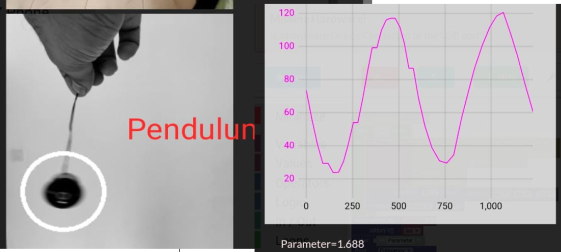
Object Tracking With Opencv and Blockly
Create programs to analyze camera data. Continue reading Object Tracking With Opencv and Blockly
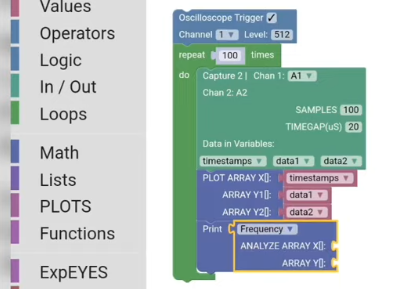
Create an Oscilloscope UI
Use Visual Programming to Create an oscilloscope. Continue reading Create an Oscilloscope UI
VL53L0X light based ranging sensor
Study of the VL53L0X LIDAR, and instructions on Adding a sensor support to the android app. Continue reading VL53L0X light based ranging sensor
A Complete Lab in Your Pocket: Why the SEELab 3 is a Game-Changer for Science Education
In the world of science and engineering education, hands-on experience is everything. Yet, the high cost of traditional lab equipment has long been a barrier for many students, schools, and hobbyists. Enter the SEELab 3, a compact, all-in-one tool that is fundamentally changing this dynamic. Priced at under $100 USD, this incredible device is more than just a piece of electronics—it’s a portable laboratory that fits in your hand, packing the power of a full-scale lab into one accessible package.
Links
College resources
SHRI SHIVAJI SCIENCE COLLEGE, AMRAVATI
The All-in-One Philosophy: A Symphony of Instruments
The genius of the SEELab 3 lies in its ability to consolidate a suite of essential test and measurement instruments into a single, USB-powered unit. Instead of needing a separate oscilloscope, function generator, and power supply, you get them all in one device that connects to your computer or Android phone.
The core instruments packed into the SEELab 3 include:
A 4-Channel Oscilloscope: With a sampling rate of up to 1 MSPS and a wide input voltage range (up to ±16V on two channels and ±3.3V on a third), the SEELab 3’s oscilloscope is perfect for visualizing and analyzing electrical waveforms.
Programmable Waveform Generators: It can generate clean sine and triangular waves from 5 Hz to 5 kHz, as well as square waves up to 100 kHz, giving you the signals you need to test and understand circuits.
DC Power Supplies: The device features two programmable DC voltage sources: one offering a range of ±5V and another with a range of ±3.3V. This allows you to power simple circuits without a bulky bench-top power supply.
Constant Current Source: A programmable constant current source, up to 3 mA, is included for experiments requiring a stable current.
Comprehensive Meters: It also functions as a highly capable Frequency Counter (measuring up to several MHz), an RC Meter for measuring resistance and capacitance, and a standard voltmeter.
Precision for a Purpose: Not a High-End Scope, but a Perfect Educational Tool
It’s crucial to understand that the SEELab 3 is not designed to replace a high-end, multi-thousand-dollar digital storage oscilloscope used in professional research or high-frequency applications. Its bandwidth and sampling rate are sufficient for the kinds of signals you encounter in educational contexts—typically audio frequencies, basic electronics, and low-speed digital signals.
The SEELab 3’s power lies in its purpose-driven design. It is fully calibrated and provides a 12-bit analog resolution, ensuring that its measurements are accurate and reliable for learning purposes. It is a tool designed to teach fundamental principles effectively, providing a hands-on experience that is robust, reliable, and more than sufficient for the job at hand. The value isn’t in competing with the high-end market, but in making essential tools accessible.
A Library of Experiments at Your Fingertips
The SEELab 3’s real power is unlocked through its extensive and well-documented library of over 100 experiments. This isn’t just a list of ideas; these are pre-built activities that guide students through everything from basic principles to complex phenomena.
Examples of the experiments include:
Fundamental Physics: Investigating Ohm’s Law, understanding the properties of AC and DC currents, and exploring electromagnetic induction by dropping a magnet through a coil.
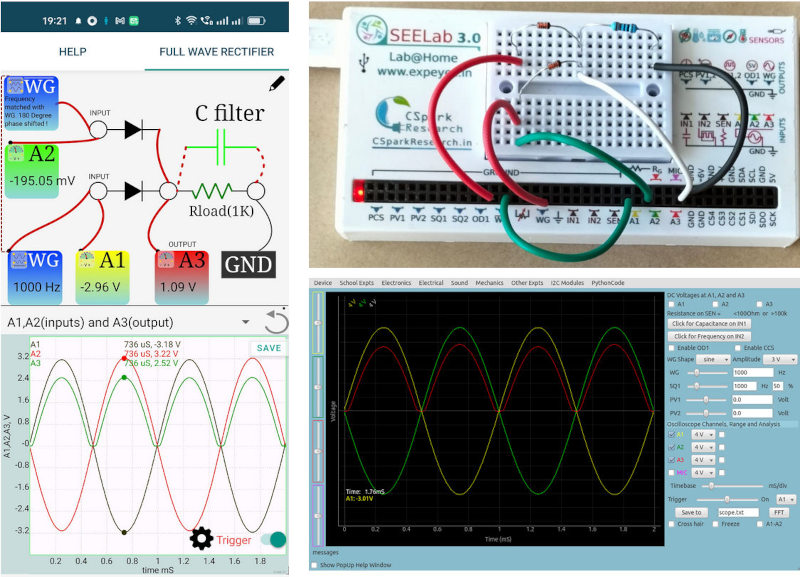
Electronics & Circuitry: Studying the characteristics of a diode, analyzing half-wave and full-wave rectifiers, and exploring transistor configurations and op-amp circuits like inverting amplifiers.
Sensor-Based Science: Using add-on I2C and SPI sensors to measure environmental parameters such as temperature, pressure, and magnetic fields, or even conducting a time-of-flight experiment to measure the acceleration due to gravity.
The Software Ecosystem: The Brains Behind the Power
The SEELab 3’s user experience is defined by its powerful and flexible software. Compatible with Windows, Linux, and Android, the software is free, open-source, and constantly updated.
Intuitive GUI: The graphical user interface provides simple, knob-and-slider controls for all instruments, making it easy to jump right in.
Visual Programming: For beginners, a drag-and-drop programming utility (based on Blockly) allows students to design their own experiments and see the corresponding Python or JavaScript code generated automatically.
Powerful Scripting: For advanced users, the Python library is a key feature. It provides an elegant way to write custom code to control every aspect of the device, automate experiments, and perform complex data analysis, all from a simple script.
In essence, the SEELab 3 is more than a low-cost alternative. It is an intelligently designed, portable lab that removes the financial and physical barriers to hands-on learning. By integrating all the necessary instruments, providing a solid software ecosystem, and focusing on a sufficient-for-purpose design, it empowers students and educators to explore the world of science and technology in a way that was previously unimaginable. It is truly a wonderful and transformative tool.